

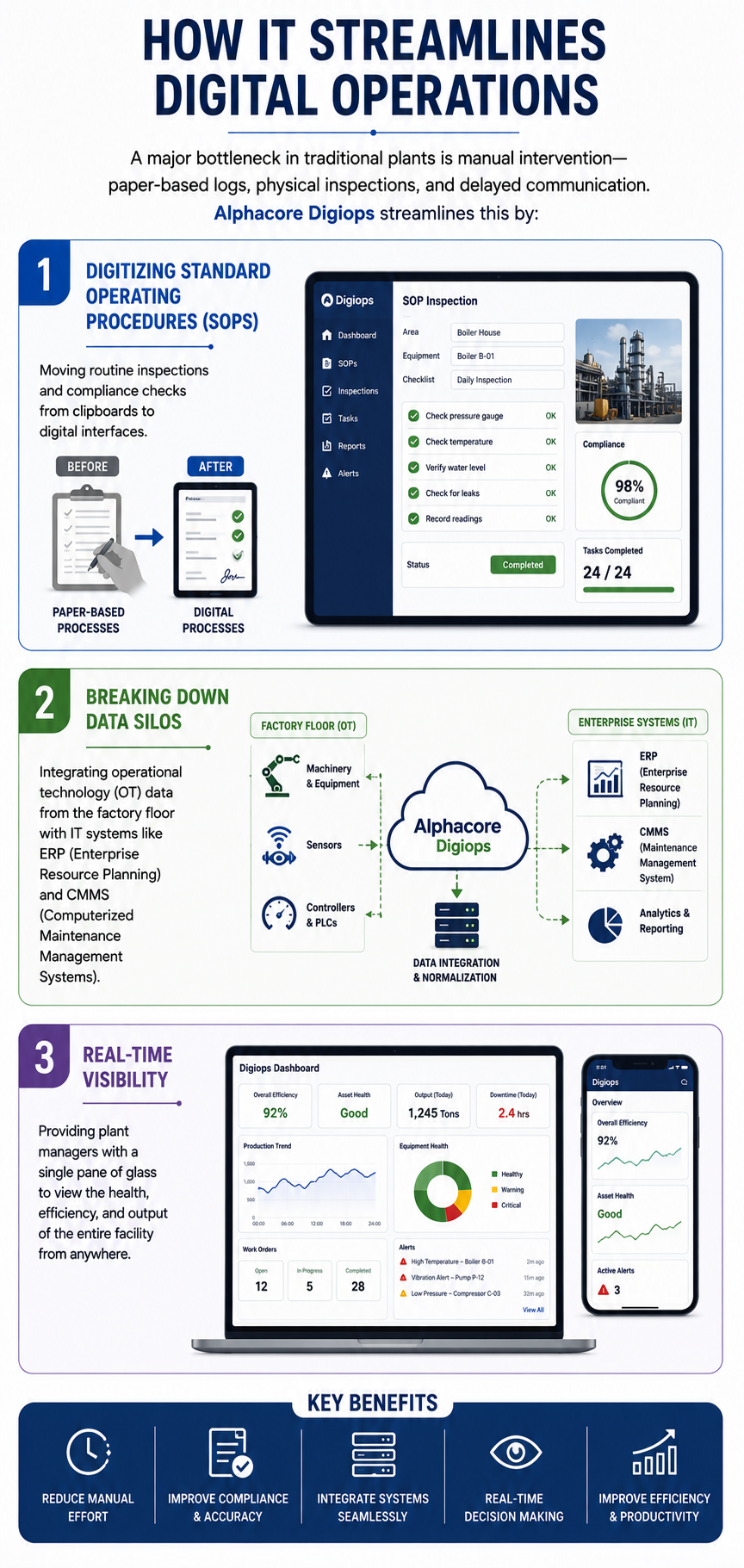
Physical machines are equipped with smart sensors (measuring vibration, temperature, pressure, flow rates, etc.) or connected via Programmable Logic Controllers (PLCs). This layer continuously streams real-time operational data to a centralized hub.
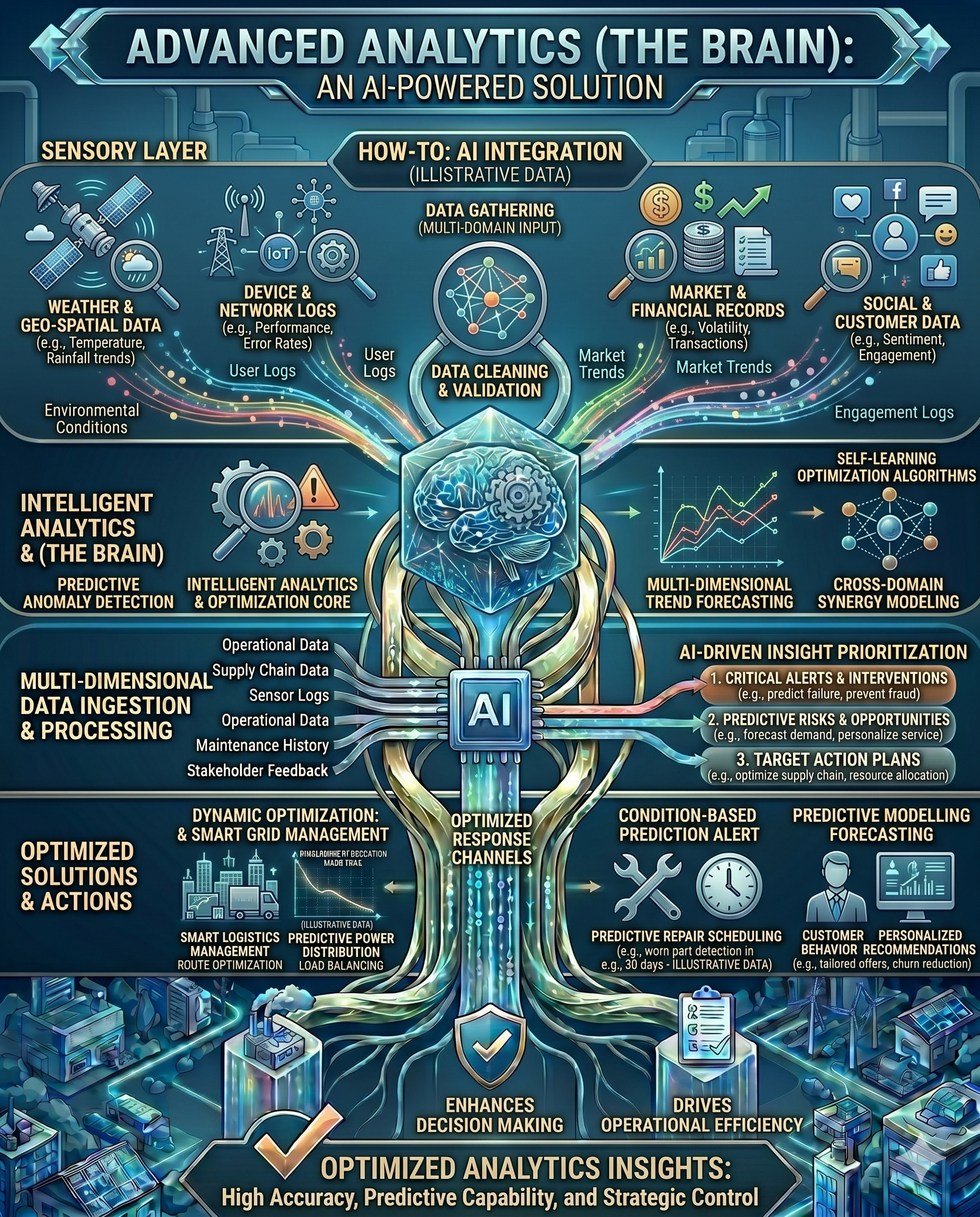
The raw data is processed using statistical models, machine learning (ML), or artificial intelligence (AI). This layer establishes “normal” baselines for every piece of equipment and constantly scans for micro-anomalies that human operators cannot detect.

When the analytics engine detects a deviation (e.g., a motor vibrating 2% above its normal threshold), it triggers a pre-defined workflow. Instead of requiring a human to notice a flashing red light on a dashboard, the system automatically generates a work order, assigns a technician, and orders the necessary replacement part.
Physical machines are equipped with smart sensors (measuring vibration, temperature, pressure, flow rates, etc.) or connected via Programmable Logic Controllers (PLCs). This layer continuously streams real-time operational data to a centralized hub.
The raw data is processed using statistical models, machine learning (ML), or artificial intelligence (AI). This layer establishes “normal” baselines for every piece of equipment and constantly scans for micro-anomalies that human operators cannot detect.
When the analytics engine detects a deviation (e.g., a motor vibrating 2% above its normal threshold), it triggers a pre-defined workflow. Instead of requiring a human to notice a flashing red light on a dashboard, the system automatically generates a work order, assigns a technician, and orders the necessary replacement part.

Mumbai
Mumbai